
V SKETCH SOLAR
Solar EV Charging Station
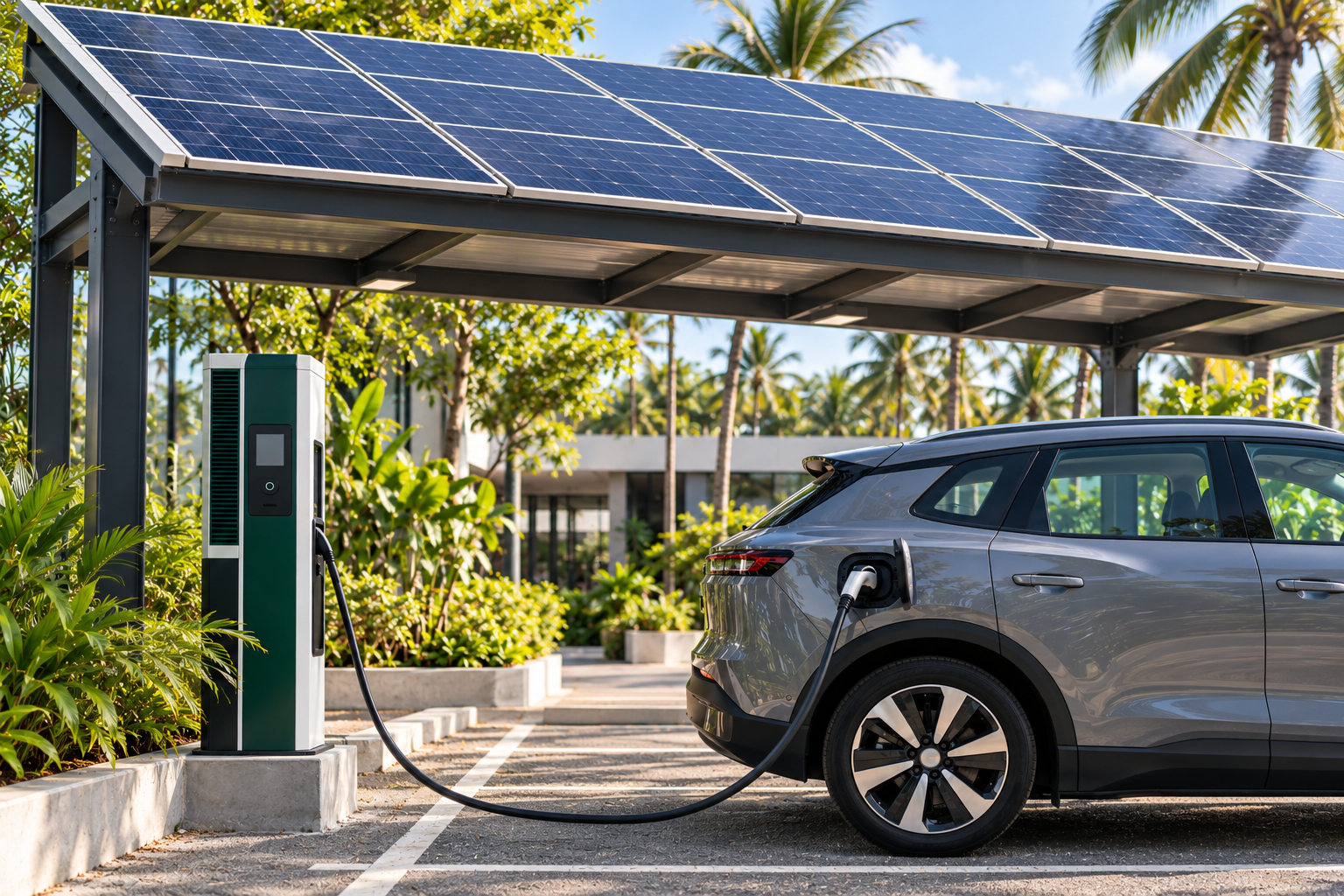
Use solar generation to support electric vehicle charging at homes, workplaces, commercial sites and public stations. V SKETCH SOLAR coordinates the solar plant, compatible charger and electrical integration, with grid support or battery storage where required.
- Primary energy source
- Solar PV generation
- Charger configuration
- Compatible AC or DC charging
- Energy support
- Grid and optional battery storage
What is a Solar EV Charging Station?
A Solar EV Charging Station combines a solar photovoltaic installation with electric vehicle charging equipment. Panels may be mounted on a nearby rooftop, a ground-mounted structure or a solar parking canopy. The electrical design coordinates the solar plant with the charger and, where required, the utility supply or battery system.
The solar plant and charging equipment are selected together, based on vehicle use, available area, electricity capacity and expected charging times.
How the energy reaches your vehicle
Solar panels generate DC electricity. In a typical AC-coupled installation, a solar inverter supplies the building or station’s AC electrical system. An AC charger then works with the vehicle’s onboard charger, while a compatible DC charging unit converts its input into a controlled DC supply for the vehicle battery.
The charger manages the charging session. Solar contribution depends on generation and charging demand at that time; when demand exceeds available solar, a grid-connected station can draw the difference from the utility.
Home and workplace AC charging
AC charging suits places where a vehicle remains parked for longer periods. The vehicle’s onboard charger affects the power it can accept, so a higher-rated charging unit does not always result in faster charging. Select equipment around the vehicle, parking arrangement and available electrical supply.
- Dedicated home parking and residential installations
- Shared apartment or workplace parking, subject to site permissions
- Scheduled charging and user access where supported by the chosen charger
Commercial, public and fleet DC charging
DC equipment supplies charging power directly to the vehicle battery through a compatible charging interface. It is useful to assess for sites requiring shorter charging stops or higher vehicle throughput. Actual charging power varies with the vehicle, state of charge, temperature and charger capability.
- Commercial locations and public charging stations
- Fleet depots and scheduled vehicle operations
- Sites with sufficient electrical capacity or a feasible supply upgrade
Choose a compatible charger
- Confirm the vehicle models and their AC/DC charging limits
- Check the connector and communication compatibility for those vehicles
- Review charger rating against single-phase or three-phase supply
- Plan the number of charging bays and simultaneous charging demand
- Choose outdoor rating, cable reach and mounting for the parking layout
Electrical and site preparation
- Assess sanctioned load, existing demand and spare supply capacity
- Plan dedicated circuits, cable routes and distribution equipment
- Coordinate earthing, isolation and electrical protection
- Review charger location, weather exposure, access and parking safety
- Identify required site permissions and utility coordination
Smart access and station management
For shared or public facilities, discuss user identification, session monitoring, metering and payment requirements. RFID, app control, load balancing and charging-management software depend on the selected equipment and service arrangement. Confirm connectivity and ongoing software charges in the proposal.
Choose the energy configuration
Grid-connected solar charging
Solar generation contributes to charging while the grid supports the remaining demand. This suits sites that require charging to remain available outside solar hours. A standard grid-tie solar plant shuts down during a grid outage.
Solar charging with battery storage
A compatible storage system can hold solar energy for later use and support the agreed charging strategy. Battery size and discharge power must match the charger and operating requirement. Charging during an outage also requires a backup-capable inverter, safe grid isolation and the correct circuit arrangement.
Stand-alone solar charging
An independent station needs its generation, storage and charging schedule designed around the required daily energy and peak charging load. Cloudy-weather reserve and a defined operating plan are important. Continuous charging is not assumed simply because panels are installed.
Plan solar capacity around charging demand
- List vehicle models, daily driving needs and expected energy per charging session.
- Review when vehicles park, how long they stay and how many charge together.
- Assess usable rooftop or canopy area, shading and mounting requirements.
- Compare charger demand with available solar generation and electrical supply.
- Define any evening use, battery reserve or outage charging requirement.
- Review monitoring, load management and future charging-point expansion.
A solar plant’s rating in kWp, a charger’s power rating in kW and stored energy in kWh describe different aspects of the installation. They are selected as a coordinated system.
What V SKETCH SOLAR can coordinate
- Understand vehicles, usage and charging-session requirements
- Coordinate solar generation and a suitable home charger or station configuration
- Assess solar mounting area, supply capacity and installation feasibility
- Coordinate agreed equipment supply and installation work
- Discuss testing, user handover, monitoring and service scope
Further reading: EV charging equipment and charging speeds
EXPLORE MORE