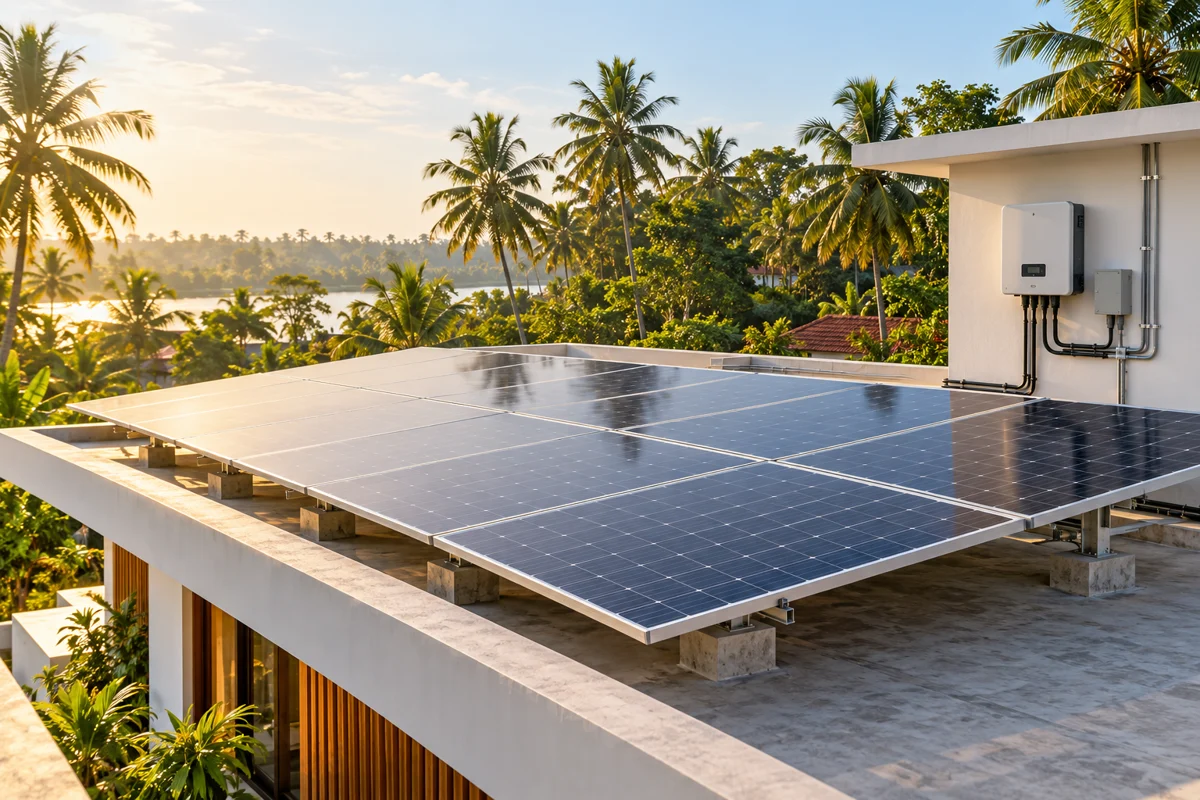
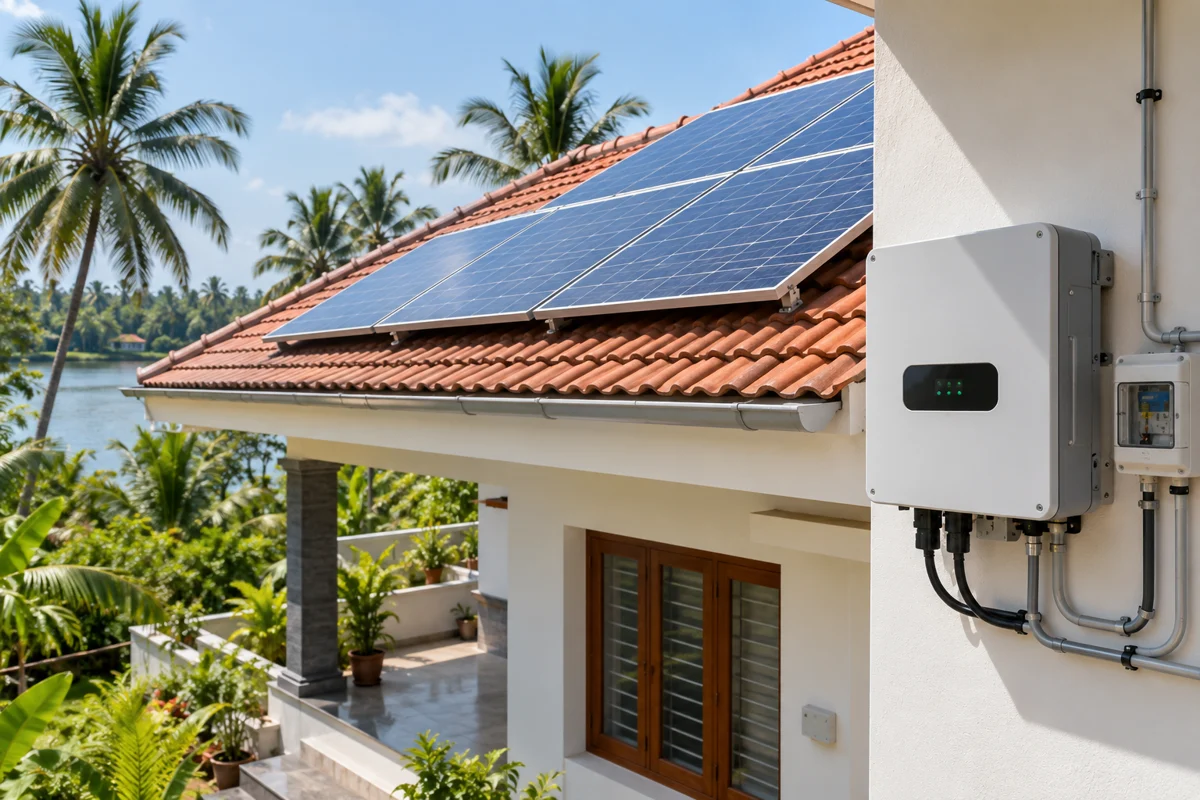
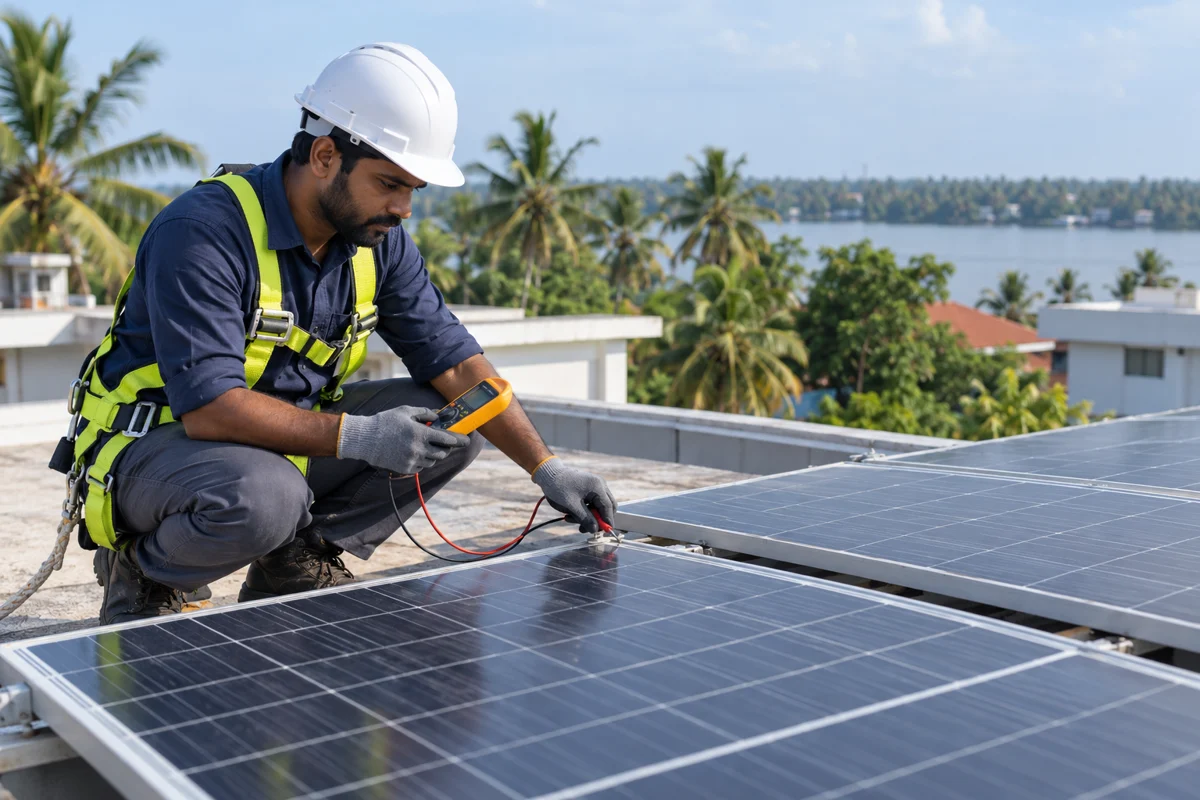
Choose a solar system around electricity consumption, available roof area and the need for backup. On-grid systems connect to the grid; off-grid and hybrid configurations require load and storage planning suited to the intended use.
Electricity bill review and system capacity discussion
Panel layout, inverter selection and electrical integration
Battery and essential-load planning where required
Commercial & industrial solar EPC
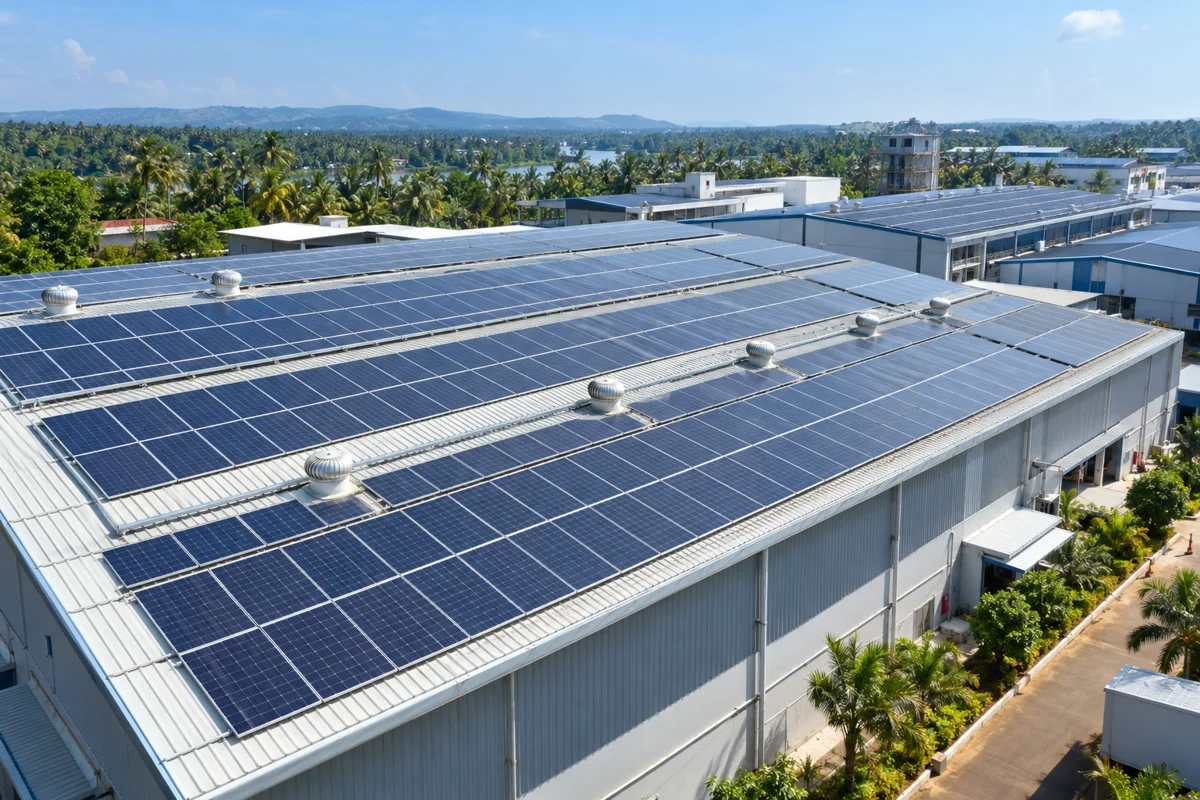
Develop a complete solar project for commercial and industrial facilities, including factories, hotels, hospitals and warehouses. Engineering, procurement and construction are coordinated around the facility’s load, roof and operating requirements.
Site assessment, plant design and equipment procurement
Mounting, electrical installation, testing and commissioning
Project documentation and commissioning coordination
Project ownership & finance options
Compare project ownership and payment arrangements before selecting an approach. CAPEX, finance or EMI and RESCO/OPEX models have different responsibilities and commercial terms; availability depends on eligibility and project feasibility.
Upfront ownership and applicable financing discussions
RESCO/OPEX feasibility and commercial scope review
Comparison of proposal terms and ongoing responsibilities
Battery energy storage
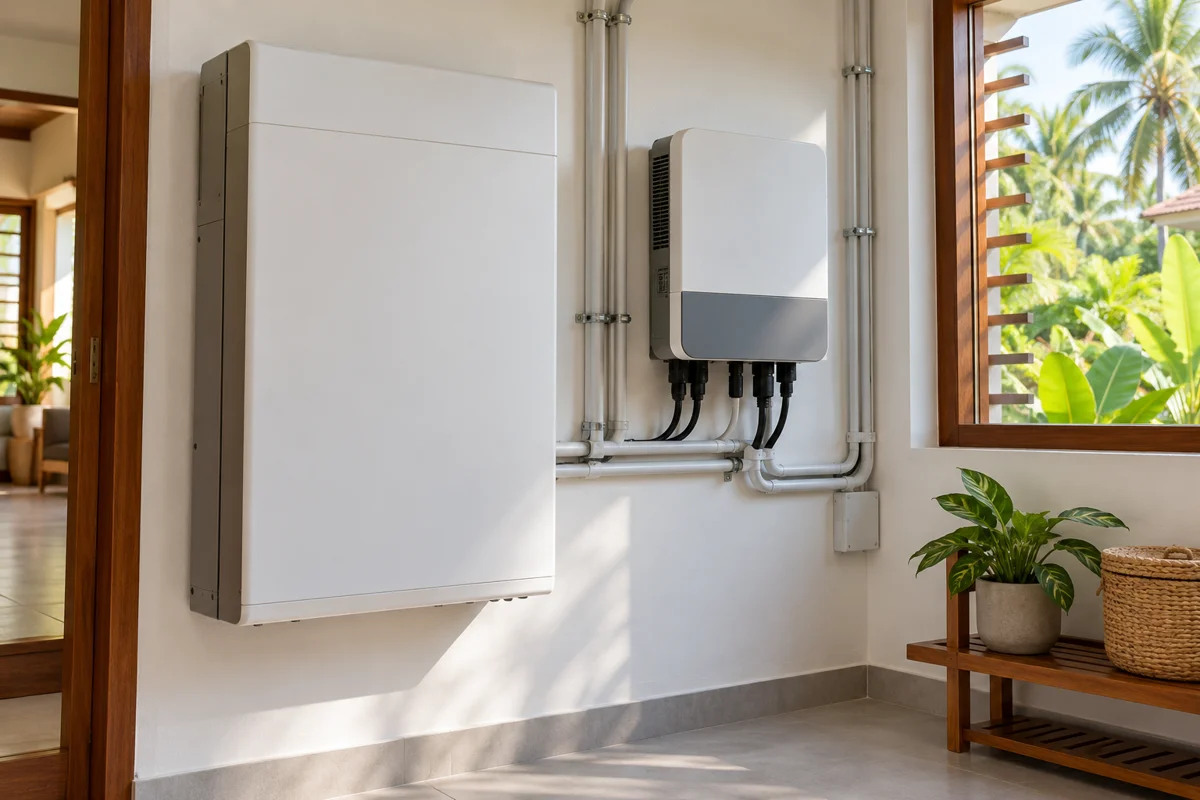
Assess battery storage against your load profile and intended purpose. Backup, energy management and peak-shaving applications require different sizing and control arrangements.
Essential loads, power demand and backup-duration review
Battery capacity and inverter compatibility assessment
Installation space, operating strategy and service access
Monitoring & maintenance
Keep track of plant operation and discuss service needs when generation changes. Maintenance scope can include inspection, performance review and preventive servicing appropriate to the installed equipment.
Generation monitoring and performance review
Preventive inspections and maintenance planning
Service reporting and annual maintenance contract options
Roofing & electrical coordination
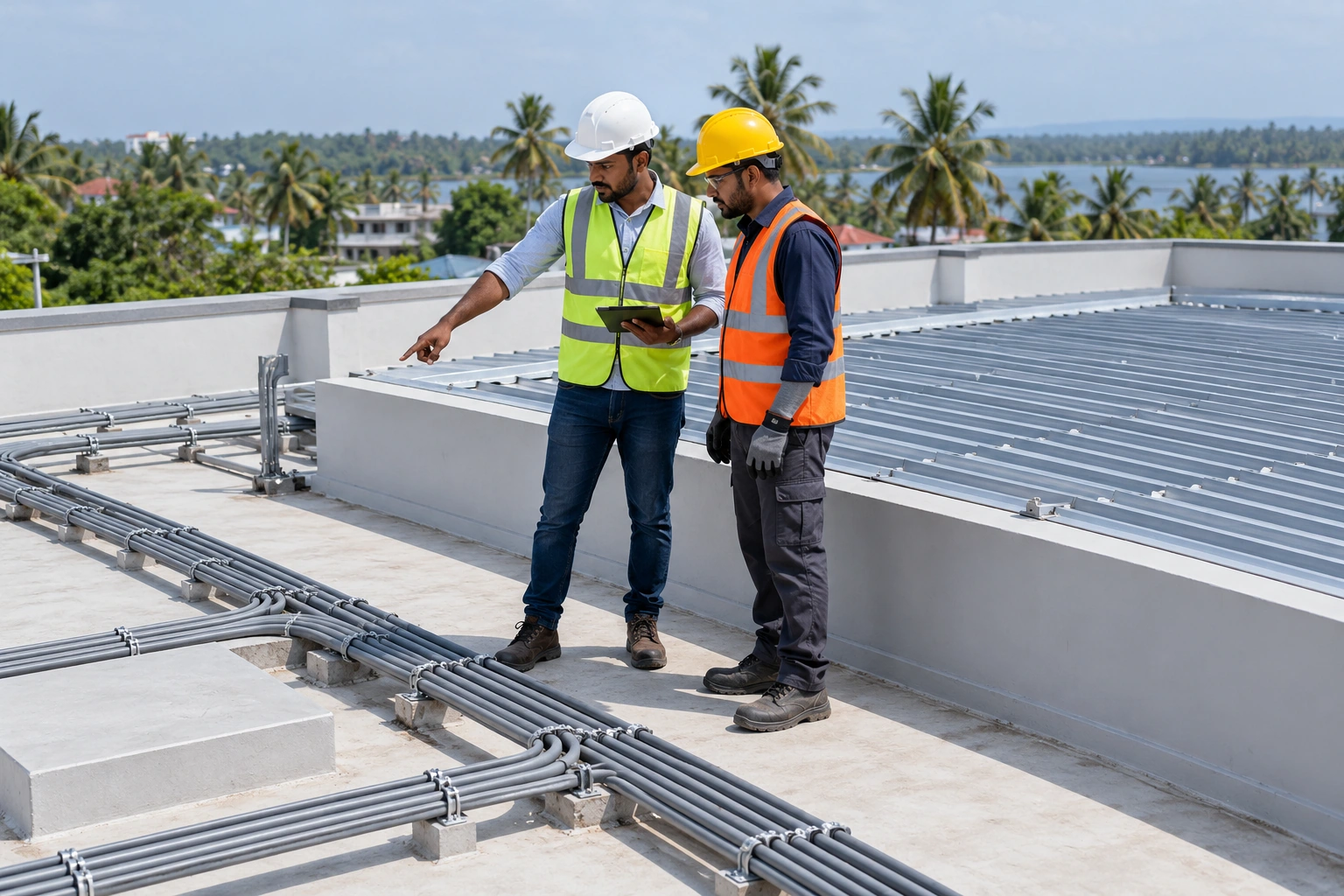
Coordinate the solar plant with the roof and the building’s electrical installation. This brings together roof condition, structural supports, mounting details and the connection requirements of the proposed system.
Roof assessment and structural-work coordination
Mounting layout, cable routing and electrical protection
Installation sequencing and maintenance access
SOLAR PANEL BRANDS
Panel brands we work with
Choose from these ten solar panel brands with V SKETCH SOLAR. We help compare module technology, rated output, roof space and inverter compatibility for homes, businesses and industrial projects.
Kirloskar Solar
Mono PERC · TOPCon
Technology
Mono PERC and TOPCon PV modules; older polycrystalline models also appear in the manufacturer catalogue.
Published range
Current offerings span 545 Wp Mono PERC to 640 Wp TOPCon; customised ratings are offered for pumping and industrial applications.
Configuration
Select the exact cell layout, monofacial/bifacial construction and module dimensions from the model datasheet.
Project fit
Residential rooftops, commercial plants, solar pumping and industrial installations.
Compare wattage, module dimensions and the panel count needed for your plant capacity.
Review TOPCon or PERC technology and monofacial or bifacial construction where offered.
Check inverter voltage and current limits, mounting layout and shading conditions.
Confirm the exact model, datasheet, product warranty and performance warranty in your proposal.
Check model-specific DCR status and applicable approvals for projects requiring eligible equipment.
Product ranges shown are manufacturer portfolio information. Available models, wattages, warranties and pricing are confirmed at quotation. Subsidy eligibility depends on the selected equipment and applicable scheme requirements.
Understand the panel specifications
N-type / P-type
The silicon cell type. TOPCon and HJT commonly use N-type cells; Mono PERC commonly uses P-type cells.
TOPCon / HJT / PERC
Different cell technologies: tunnel oxide passivated contact, heterojunction and passivated emitter and rear cell.
M10 / G12 / G12R
Cell or wafer formats. R denotes a rectangular format, independently of the cell technology.
Monofacial / bifacial
Monofacial modules collect front-side light. Bifacial modules also use rear-side light; additional generation depends on reflected light and installation.
Wp & efficiency
Wp is rated output under standard test conditions. Efficiency describes conversion per module area; daily energy varies with weather, shading and installation.
Specifications included in your panel selection
Confirm model and power bin; cell technology and format; dimensions and weight; Pmax, Vmp, Imp, Voc and Isc; temperature coefficient; glass and frame; bifaciality; mechanical-load limits; product and performance warranties; and model-specific DCR, BIS and ALMM status where required.
SOLAR INVERTER BRANDS
Inverter options we work with
V SKETCH SOLAR works with these nine inverter brands. We help you select an inverter around your solar capacity, roof layout, electricity supply and backup needs.
Microtek
Grid-tie · Hybrid · Solar PCU
Solar inverter options for grid-connected generation and battery-based power needs. Discuss the suitable inverter or power conditioning unit around your connected load and backup requirement.
Microinverter solutions for rooftop solar, with independent tracking of connected modules according to the selected model. A useful option to discuss where the roof layout calls for flexibility across panel groups.
Panel-level power conversion with IQ Microinverters, allowing individual solar panels to operate independently. Discuss a compatible microinverter and monitoring configuration for your rooftop layout.
On-grid and off-grid solar inverter ranges for different electricity and backup requirements. Selection considers supply phase, plant size, connected load and whether a battery-based arrangement is needed.
Grid-tie solar inverter options for converting solar-panel output into usable AC electricity. Discuss suitable single-phase or three-phase equipment and monitoring features for the proposed system.
A Lagnuvo initiative offering solar inverter ranges for homes, businesses and larger installations. Discuss on-grid or hybrid configurations around your project size and storage requirements.
Solar inverter and power backup options spanning grid-connected, hybrid and off-grid applications. Equipment selection considers the site’s power demand, supply phase and battery requirements.
PV inverter and energy storage inverter ranges for residential and commercial applications. Discuss the appropriate string or storage configuration, battery compatibility and monitoring arrangement.
String, hybrid, off-grid and microinverter options for different solar layouts and energy needs. Discuss plant capacity, battery integration and the inverter configuration that suits your site.
Model, capacity, phase, monitoring, battery compatibility and warranty terms depend on the selected equipment. Contact us to confirm the models available for your project.
PROJECT APPROACH
How your project takes shape
Review electricity bills, consumption and the load profile.
Survey the roof, usable area, shading and structural requirements.
Develop system capacity, layout and a generation and savings estimate.
Compare commercial options and agree the project scope.
Install, test, commission and coordinate grid requirements.
Set up monitoring and discuss ongoing maintenance.
START THE CONVERSATION
Tell us about your requirement
Recent electricity bills, site location, roof photographs or dimensions, connection type, daytime consumption and any backup requirements.
Capacity, savings, financing, approvals and commercial terms depend on site conditions and project-specific assessment.